Retire in Malaysia: MM2H Has Four Tiers Now, and the Foreign-Income Tax Exemption Just Got Extended to 2036
Malaysia pairs world-class private hospitals with a long-running foreign- sourced income exemption that Budget 2025 extended through December 2036 — one of the most generous structural tax breaks for retirees in Asia. The catch is that MM2H, the program that gets you in, was overhauled in June 2024 into four tiers ranging from a USD 32,000 entry point to USD 1 million.
The tier you pick changes everything: your visa duration (5 to 20 years), the property you have to buy (RM 600K to RM 2M), whether you can work, and whether you bring foreign maids. And for retirees aged 50+, MM2H has no minimum-stay requirement — a quiet but consequential rule that lets you keep US tax residency, snowbird, or live full-time, all on the same visa.
Visa figures reflect the MOTAC MM2H Guidelines (revised June 14, 2024). Tax information reflects the PwC Malaysia 2025 tax summary and Income Tax (Exemption) (No. 5) Order 2022, as extended by Budget 2025. Requirements change — verify with a MOTAC-licensed MM2H agent before applying.

Updated · Published
This page is educational, not licensed tax or immigration advice. The Malaysian Roth IRA treatment under the FSI exemption is unsettled — confirm current treatment with a Malaysia-licensed tax advisor before establishing tax residency if Roth distributions will be a meaningful income source.
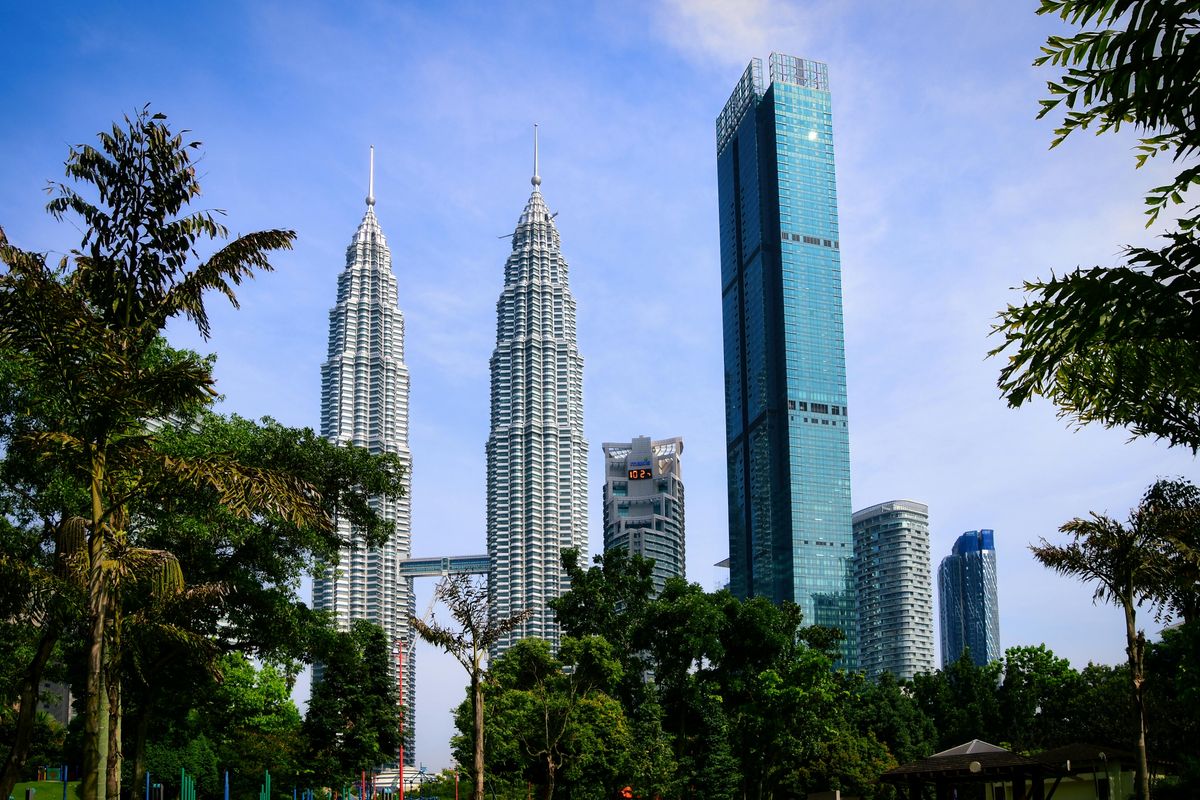
Healthcare in Malaysia
Malaysia runs a dual public/private health system. The public system technically admits foreign residents — but at "foreigners' rates" that run 24–100 times the citizen rate, depending on the facility and service. Most expat retirees treat the public hospitals as an emergency backup and use the private network for everything else, which is where Malaysia's reputation as a medical-tourism hub actually delivers.
Ministry of Health (MOH) hospitals and Klinik Kesihatan clinics
Subsidized rates at MOH facilities are reserved for Malaysian citizens. As a legal foreign resident — including on MM2H — you can access the same facilities but you'll be charged unsubsidized "foreigners' rates" that run 24 to 100 times the citizen rate. A specialist outpatient appointment at a government hospital might cost you RM 60–300+; the same visit costs a citizen a few ringgit.
In practice, plan to use the public system mainly as an emergency fallback. The private network is where your day-to-day care will happen.
Gleneagles, Pantai, Prince Court, Sunway
Malaysia has 16+ JCI-accredited private hospitals concentrated in Kuala Lumpur, Penang, and Johor Bahru. Gleneagles KL, Pantai Hospital KL/Penang, Prince Court Medical Centre, and Sunway Medical treat large international-patient populations and accept direct billing from most major international insurers. Private GP visits run RM 30–125; specialist consultations RM 80–400; comprehensive medical check-up packages RM 500–2,500.
Care quality at the top private hospitals is comparable to a US academic medical center — at 50–80% of US prices.
Malaysian-domestic insurers
AIA Malaysia, Great Eastern, Allianz Life Malaysia, Prudential Malaysia, and Tokio Marine offer Malaysian-domestic plans at roughly RM 400–1,250/month at age 60 (~USD 90–265). Premiums step up at age 65. Most local insurers cap new-applicant age at 60–70 and exclude or surcharge pre-existing conditions. Coverage is generally Malaysia-only.
The practical default for US retirees on MM2H
International plans from Cigna Global, Allianz Care, AXA Global Healthcare, William Russell, Bupa Global, and IMG have no upper age cap for new applicants, satisfy the MM2H insurance requirement, and travel with you when you visit the US or relocate. They cost more than local plans but solve the new-applicant age-cap problem you'll likely hit shopping Malaysian-domestic insurers after 60.
~$300–$700/month at age 65 depending on coverage level and deductible.
MM2H — Four Tiers, Three Programs, One Critical Rule for Retirees Over 50
Malaysia My Second Home (MM2H) is the country's long-stay program for foreigners, administered by the Ministry of Tourism, Arts and Culture (MOTAC) since the June 2024 overhaul. The federal program has four tiers; the states of Sarawak and Sabah run their own separate, lower-threshold versions.
If you're 50+, the structural rule that matters most isn't the deposit amount — it's that you're exempt from the 90-day annual minimum stay. The 90-day rule applies only to applicants aged 25–49. You can hold MM2H residency, access Malaysian banking and private healthcare, and still spend fewer than 182 days a year in Malaysia — keeping you outside the Malaysian tax-residency threshold entirely.
The entry tier for most US retirees
Age 25+, USD 150,000 fixed deposit (~RM 610,000) in a Malaysian bank, plus mandatory purchase of a Malaysian residence worth at least RM 600,000 (~USD 147,000). RM 1,000 one-off application fee. 5-year visa, renewable every 5 years. No employment permitted. 90-day annual stay (under 50); none for 50+.
The standard tier if you want Malaysian residency without going large on real estate.
Mid-tier with a 15-year visa
Age 25+, USD 500,000 fixed deposit, plus RM 1,000,000 property purchase (~USD 246,000). RM 3,000 application fee. 15-year visa, renewable every 5 years. No employment permitted.
20-year visa with employment rights
Age 25+, USD 1,000,000 fixed deposit, plus RM 2,000,000 property purchase (~USD 491,000). RM 200,000 application fee. 20-year visa, renewable every 5 years. The only MM2H tier that permits employment or running a business in Malaysia, and the only tier that permits bringing in foreign domestic helpers.
The cheapest tier for retirees aged 50+
Age 21+, USD 65,000 fixed deposit for ages 21–49 OR USD 32,000 if you're 50+. Property must be purchased from an approved developer in a designated Special Economic Zone or Special Financial Zone (Iskandar Johor is the largest). 10-year visa. No employment permitted.
Lowest financial threshold of any federal MM2H tier — by an order of magnitude
Best fit if you want a Malaysian residence in a designated zone (most often Iskandar, just across from Singapore)
Same 50+ minimum-stay exemption as the higher tiers
If you're over 50 and want MM2H residency at the lowest financial cost, SEZ/SFZ at USD 32,000 is your practical entry point.
Separate state program — much lower threshold
Sarawak runs its own MM2H program with a 30-day annual stay requirement and a RM 500,000 fixed deposit (raised from RM 150,000 in 2025). Alternative qualifying paths: RM 10,000/month offshore income (individual) or RM 15,000/month (couple), OR savings of RM 100K / 200K. Age 30+, 5-year renewable visa. S-MM2H holders can live anywhere in Malaysia except Sabah.
Launched July 2024 — three tiers, 10-year residency
Sabah launched its own MM2H program in July 2024 with three tiers (Silver/Gold/Platinum) and a RM 150,000 fixed deposit at the Silver entry point. 30-day annual stay requirement; 10-year residency. Lower visibility than S-MM2H but a valid option for retirees targeting East Malaysia.
Permanent residency and citizenship aren't realistic for retirees
Malaysian permanent residency is discretionary and rarely granted to non-employment-based applicants. Naturalization requires 10+ years of residence plus Malay-language proficiency, and Malaysia does not permit dual citizenship — a deal-breaker for US citizens, who would have to renounce US citizenship to naturalize. For most US retirees on MM2H, indefinite renewal of the long-tier visa is the practical end state.
The MM2H insurance requirement — RM 80,000 minimum
All MM2H participants must obtain health insurance with minimum coverage of RM 80,000, maintained throughout the visa period. A mandatory medical check-up at a MOTAC-appointed panel clinic is required before visa endorsement.
Applicants under 60 must show Malaysia-approved insurance before endorsement. Applicants aged 60+ are assessed case-by-case — recognizing that Malaysian-domestic insurers often cap new-applicant ages at 60–70. Most retirees over 60 use international insurers (Cigna Global, Allianz Care, IMG, AXA Global Healthcare, William Russell, Bupa Global) which have no upper entry age.
The insurance requirement runs for the life of your MM2H visa — it's not a one-time application document.
Social Security and Taxes
Malaysia and the United States have no bilateral tax treaty and no totalization agreement. Less protection than Portugal or Greece on paper — but Malaysia's territorial-style foreign-sourced income exemption does most of the work in practice, especially after Budget 2025 extended the exemption through the end of 2036.
Payable in Malaysia; no Malaysian SS contribution required
Moving to Malaysia doesn't reduce your US Social Security benefit
US SS is payable to US citizens living in Malaysia — direct deposit to a Malaysian bank account is generally available
Malaysia's EPF/SOCSO doesn't require non-citizen retirees to contribute, so there's no double-SS problem despite the missing totalization agreement
No US-Malaysia tax treaty — you rely on the US Foreign Tax Credit (Form 1116) to offset any Malaysian tax paid on the same income
Extended through 31 December 2036 by Budget 2025
Malaysia's headline benefit for retirees. Resident individuals are exempt from Malaysian tax on foreign-sourced income received in Malaysia for all classes of income (except partnership-business income earned in Malaysia). Budget 2025 extended this exemption from its previous 2026 sunset all the way to 31 December 2036 — a 10-year extension that converts Malaysia into a long-term structural tax-friendly destination for US retirees.
Applies to resident individuals (Malaysian tax residency = 182+ days/year in Malaysia)
Covers all classes of income except partnership-business income from Malaysia
Conditional on the income being "subject to tax of a similar character to income tax" in the source country — broadly read in the IRB's September 2022 guidelines
MOTAC affirms in MM2H Section 07: "Participants receive tax exemption on foreign funds or income."
For most US-source retirement income — Social Security, IRA, 401(k), pensions — the exemption applies cleanly. Roth IRA treatment is unsettled but defensible (see Retirement Account Treatment below).
Stay under 182 days/year and skip the exemption question entirely
Non-residents are outright exempt from Malaysian tax on foreign-sourced income under Paragraph 28 of Schedule 6 — no time limit, no documentation required, no "subject to tax" condition to satisfy. On MM2H 50+ with no minimum stay, if you spend fewer than 182 days a year in Malaysia you're a non-resident for tax purposes and you pay Malaysian tax only on Malaysian-source income (e.g. rental income from a Malaysian property).
If you're a snowbird or you hold substantial Roth balances, the non-resident path is your cleanest planning lever — MM2H 50+ enables it structurally.
Malaysian resident progressive PIT rates (YA 2024+)
Non-residents pay a flat 30% on Malaysian-source income only, with no personal reliefs. These resident rates only matter for the (rare) case where the FSI exemption doesn't apply to a Malaysian tax resident. Source: PwC Malaysia and LHDN.
What This Actually Costs You
Two scenarios on the same retiree: $50,000/year of income, fully remitted to Malaysia, age 65, single, MM2H Silver tier. The story is short — the FSI exemption does most of the work.
Scenario A — $50,000/year US Social Security, MM2H Silver (Malaysian tax resident)
IllustrationScenario B — $50,000/year from a Traditional IRA, MM2H Silver (Malaysian tax resident)
Illustration*The $6,000-per-person senior deduction (OBBBA) applies for tax years 2025–2028, phasing out above $75,000 MAGI (single) — it applies in full at this income level.
The result
Malaysia's FSI exemption + MM2H 50+ no-minimum-stay rule combine to give US retirees an unusually flexible setup: live full-time in Malaysia and rely on the FSI exemption, or snowbird under 182 days and rely on the non-resident exemption. Either path produces no Malaysian tax for typical Social Security and pre-tax retirement income.
Examples are illustrative only. Tax treatment depends on your full income picture, your residency status, the visa you hold, and the calendar-year timing of your remittances. US citizens remain subject to US federal income tax filing requirements regardless of residence — the Foreign Tax Credit (Form 1116) may offset US tax owed on income that's also taxed in Malaysia. Consult an expat CPA who handles both US and Malaysian returns before making decisions. Exchange rate used: ~RM 4.07/USD (September 2026). Figures use YA 2025 Malaysian tax brackets.
Retirement Account Treatment — Roth IRAs & 401(k)s
With no US-Malaysia tax treaty, retirement-account treatment depends entirely on (a) your Malaysian residency status under the 182-day test, and (b) the FSI exemption's "subject to tax" condition. Pre-tax accounts behave predictably. Roth accounts are the unsettled area — but Malaysia's IRB guidelines are more favorable than most non-treaty countries.
FSI exemption applies — no Malaysian tax owed
Non-resident (under 182 days/year)
Outright exempt under Paragraph 28 of Schedule 6 — non-residents pay Malaysian tax only on Malaysian-source income. US side: taxed as ordinary income. No Malaysian tax to credit.
Resident (182+ days/year)
Distributions are unambiguously "subject to tax" in the US (taxed as ordinary income), which satisfies the FSI exemption's source-country condition cleanly. Exempt from Malaysian tax through 31 December 2036. Net cost: US federal income tax only.
Defensible favorable reading — but no LHDN ruling on point
Non-resident path — the cleanest outcome
If you stay under 182 days/year (easy on MM2H 50+ with no minimum-stay rule), you're a non-resident and outright exempt from Malaysian tax on foreign-source income under Paragraph 28 of Schedule 6. The Roth treatment question becomes moot. If your Roth balance is large enough to matter, this is the recommended path.
Resident, favorable reading (well-supported)
The IRB's September 2022 FSI guidelines include a carve-out for income "exempted from source-country tax pursuant to tax incentives." The Roth IRA's tax-free status exists precisely because the US Tax Code grants a retirement-savings incentive — the policy fits the carve-out cleanly. Under this reading, the FSI exemption applies and Roth remittances are exempt from Malaysian tax.
Resident, conservative reading
No LHDN ruling, court case, or published practitioner consensus has tested Roth IRAs specifically. A literal "subject to tax" reading could deny the exemption, in which case the full remittance (not just growth) is taxed at Malaysian progressive rates. Because there's no US tax on a qualified Roth distribution to credit against, any Malaysian tax becomes a real out-of-pocket cost — the Foreign Tax Credit doesn't help.
The planning lever — use MM2H 50+ to control your tax residency
MM2H's no-minimum-stay rule for the 50+ cohort is the key planning tool for US retirees. You can hold MM2H residency permanently while staying under 182 days/year — never becoming a Malaysian tax resident and never engaging the FSI subject-to-tax question. Use MM2H as an access vehicle (banking, healthcare, easy long stays) without triggering Malaysian tax residency. For retirees relying heavily on Roth withdrawals, this is the cleanest setup. More on Roth IRAs abroad →
What Happens to Your Medicare
The same universal Medicare rules apply in Malaysia — Original Medicare covers nothing outside the US, and Medicare Advantage plans auto-disenroll after six months abroad. Malaysia's twist is structural: the private hospital network is good enough and cheap enough that for routine care you likely won't need Medicare at all while you're abroad.
Original Medicare covers nothing in Malaysia
Medicare Advantage plans auto-disenroll after 6 months abroad — switch to Original Medicare before you leave
No bilateral healthcare agreement between the US and Malaysia
Malaysia's JCI-accredited private hospitals are the practical alternative — English-speaking, 50–80% below US prices, with direct billing to most international insurers
The Part B question
For retirees fully relocating to Malaysia, dropping Part B saves $202.90/month — but the permanent late enrollment penalty applies if you re-enroll later. The math is most favorable when you're confident the move is permanent and you'd prefer to spend serious care money at Gleneagles KL or Pantai Penang rather than fly back. See the Medicare guide for the full analysis.
Your next step
Most US retirees who land on Malaysia after comparison shopping work through the same four decisions, in this order.
1 · Confirm you're 50 or older
The 50+ exemption from MM2H's 90-day annual minimum stay is the single most consequential rule on this page. It lets you choose between full-time residency (FSI exemption applies) and snowbird/non-resident status (Paragraph 28 exemption applies) without changing visas. If you're under 50, MM2H still works — you'll plan around the 90-day requirement.
2 · Pick your tier
Three federal options for most retirees, plus the two state programs:
SEZ/SFZ at USD 32,000 deposit (50+) — cheapest entry, requires buying in a designated zone (Iskandar Johor is the largest)
Silver at USD 150,000 + RM 600K property — most common standard tier
Sarawak (S-MM2H) at RM 500K deposit + 30-day stay — separate program, lower threshold, lets you live anywhere except Sabah
3 · Engage a MOTAC-licensed MM2H agent
All MM2H applications must go through a tour operator licensed under the Tourism Industry Act 1992 — you can't file directly yourself. Agents handle the document package, MOTAC submission, and the in-Malaysia steps once approved. Fees vary by tier and agent; ask for an itemized quote and verify the agent's MOTAC license number against the official agency list.
4 · Line up MM2H-compliant health insurance
Minimum RM 80,000 coverage maintained for the life of your visa, plus a medical check at a MOTAC-appointed panel clinic before endorsement. If you're 60+, plan on an international insurer — most Malaysian-domestic carriers cap new-applicant ages at 60–70.
→ See which international plans satisfy the MM2H requirement
Then: if you're keeping US Medicare, work through the Part B keep-or-drop decision before you leave (the late-enrollment penalty is permanent). If you're a snowbird or perpetual traveler, the non-resident path means you don't need to touch the FSI exemption paperwork at all.
Sources
- MM2H Guidelines — Ministry of Tourism, Arts and Culture (MOTAC): Primary source for the four-tier MM2H structure (Platinum/Gold/ Silver/SEZ), 90-day minimum stay (under 50 only), dependent rules, compulsory property purchase, and Section 07's foreign-income tax exemption affirmation.
- Revised MM2H Guidelines (June 14, 2024 MOTAC revision) — Official MM2H: Tier financial requirements, application fees, visa duration, renewal rules.
- New 3-tier MM2H & SEZ JB Requirements — Alter Domus: SEZ/SFZ tier deposit (USD 65k under 50; USD 32k aged 50+).
- MM2H Health Insurance Requirements 2026 — Bratu Capital: RM 80,000 minimum coverage; age 60+ case-by-case assessment.
- S-MM2H 2025 Requirements — Invest Sarawak: Sarawak's separate program, RM 500K fixed deposit, 30-day annual stay.
- Malaysia Individual Income Tax — PwC Tax Summaries: Resident progressive PIT rates (YA 2024+), non-resident 30% flat rate.
- Malaysia Individual Income Determination (FSI) — PwC Tax Summaries: FSI exemption period, scope, partnership-business exclusion.
- FSI Exemption Orders Gazetted — EY Malaysia: Income Tax (Exemption) (No. 5) Order 2022 text; "of a similar character to income tax" condition.
- Tax Treatment of Income Received from Outside Malaysia — EY Malaysia: IRB September 2022 guidelines — six "subject to tax" carve-outs including the tax-incentives carve-out relevant to Roth IRAs.
- Is Your Foreign-Sourced Income Exempt from Tax? — PwC Malaysia: Practitioner explainer on the subject-to-tax carve-outs.
- Government Extends FSI Exemption for Another 10 Years — The Edge Malaysia: Budget 2025 extension to 31 December 2036.
- Tax Rate — Lembaga Hasil Dalam Negeri (LHDN): Primary government source for resident and non-resident tax rates.
- International Agreements Overview — Social Security Administration: Confirms no US-Malaysia totalization agreement.
- Malaysia Expat Tax Guide — Greenback Tax Services: Confirms no US-Malaysia tax treaty; practitioner overview.
- Malaysia Senior & Retirement Visa Health Plans — Pacific Prime: Age 60+ premium ranges; local and international insurer comparison.
Find a plan that satisfies the MM2H insurance requirement
MM2H requires minimum RM 80,000 health insurance coverage throughout the visa period. Local Malaysian insurers often cap new-applicant ages at 60–70, which makes international insurers (Cigna Global, Allianz Care, IMG, AXA Global Healthcare) the practical default for most US retirees over 60. See which plans qualify, including options that travel with you when you visit the US.
See which plans work for Malaysia